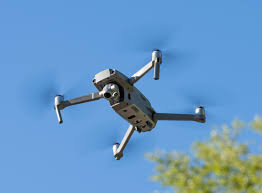
As drone technology becomes more widely available, government officials and aviation authorities are working to balance innovation with public safety. Military drones, often referred to as Unmanned Aerial Vehicles (UAVs), are aircraft operated without a pilot on board. They are used by the U.S. military for surveillance, intelligence gathering, reconnaissance missions and, in some cases, targeted operations.
Military drone operations are governed by both domestic and international law. In the United States, the Department of Defense follows federal law and policies such as the Authorization for Use of Military Force. International humanitarian law also guides how drones may be used in armed conflict. Within U.S. airspace, the Federal Aviation Administration (FAA) regulates flight rules and safety standards.
Recently, serious concerns have grown over unauthorized drone activity. Reported incidents include drones flying near major airports and disrupting commercial flights, entering restricted military airspace and being used to smuggle contraband into correctional facilities.
American Government teacher Ms. Zupancic gave her feedback: “Drones are much cheaper than various other machinery, such as tanks, but enforcing stricter regulations could help manage the lingering concerns better.”
Government officials argue that the rapid growth of drone ownership presents new challenges. Because many drones are affordable and capable of flying long distances or reaching high altitudes, authorities say updated security measures are necessary to protect commercial aviation and sensitive infrastructure. Proposed security measures include expanding funding for drone detection systems and strengthening penalties for unauthorized flights.
In response, federal agencies have implemented several safety measures. Most drones must be registered with the FAA, and newer rules require Remote ID technology that broadcasts identifying information during flight. Geofencing systems prevent many drones from entering restricted areas, and Temporary Flight Restrictions can be issued for large events or emergencies. Law enforcement agencies are also authorized in certain situations to disable drones that pose immediate threats.
Experts emphasize that the majority of drone use in the United States is legal and recreational. Commercial photographers, farmers and infrastructure inspectors rely on drones for legitimate purposes. Authorities distinguish between lawful use and potential threats by examining factors such as flight location, registration status, and behavior near critical sites.
As drone technology continues to evolve, policymakers face the ongoing task of protecting public safety while allowing beneficial uses of the technology. Officials say continued education, regulation updates and public awareness will play key roles in addressing both opportunities and risks associated with unmanned aircraft systems.