On October 9, 2012, Malala Yousafzai was shot in an attempted assassination by the Pakistani Taliban because of her activism for women’s right to receive an education. She recently published a book about growing up and living her life unbothered by her past.
Yousafzai was born in Mingora, Pakistan, on July 12, 1997. Her father was a teacher at a girls’ school and encouraged her to learn.
The Taliban took over Swat Valley, the district in which Yousafzai lived, in 2007. In January of 2009, they banned girls from attending school and receiving an education. Following the ban, Yousafzai began her activism by writing a blog documenting the military occupation in Mingora under the pseudonym Gul Makai, a name from a Pashtun folktale. Her identity was eventually revealed, but she continued to publish blogs advocating for women’s right to education. Her voice made her a target of the Taliban.
On the ninth of October, 2012, Yousafzai and her friends were riding a bus home from school when a masked man boarded and said three words: “Who is Malala?” She was shot in the left side of the head and was lifelighted to Queen Elizabeth Hospital in Birmingham, England. The shooting had damaged a nerve in her face, leading to half of her face being permanently paralyzed.
Ms. Shaw, English teacher at THS, says, “I first heard Malala’s story shortly after the news broke about the attack. I remember being amazed that someone so young had spoken out so boldly for girls’ education, even when it put her life at risk. Her courage made a lasting impression on me and showed how one person’s bravery can inspire people all over the world.”
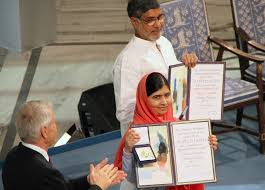
The attack did not dampen her spirit. Yousafzai and her father created the Malala Fund in 2013 and she won the Nobel Peace Prize in 2014. She was also made a United Nations Messenger of Peace in 2017.
Yousafzai wrote an autobiography titled “I Am Malala,” which was published almost a year after the attempt on her life. This year, she published “Finding My Way: A Memoir.” She was written a total of eight books, six of which are nonfiction books and two that are childrens’ books.
Yousafzai is a highly inspirational and historical figure. Her actions and bravery to speak out in the face of possible repercussions make her a role model for today’s youth.
Sophomore Meghan Coyle says, “It affected me because it made me happy to know that in this chaotic world, there are still good people and inspired me to spread that goodness and help those in need.”
Her new book focuses on her life rather than her activist career, letting readers get a more intimate view into her life. Yousafzai writes about the education she received at Oxford University, her personal relationships with friends and her husband, as well as how she handles PTSD and trauma from the attack. This is unlike her first book, which highlights her experiences in Swat Valley, her advocacy for the education of all, and the attempt on her life.
“Finding My Way: A Memoir” is available at most bookstores and online.